
FROM ASTERROW • AUTHOR NOTE
Writing the story was only the beginning. Formatting it, publishing it, and learning what the industry expected became an education of their own. At least, that was my experience.
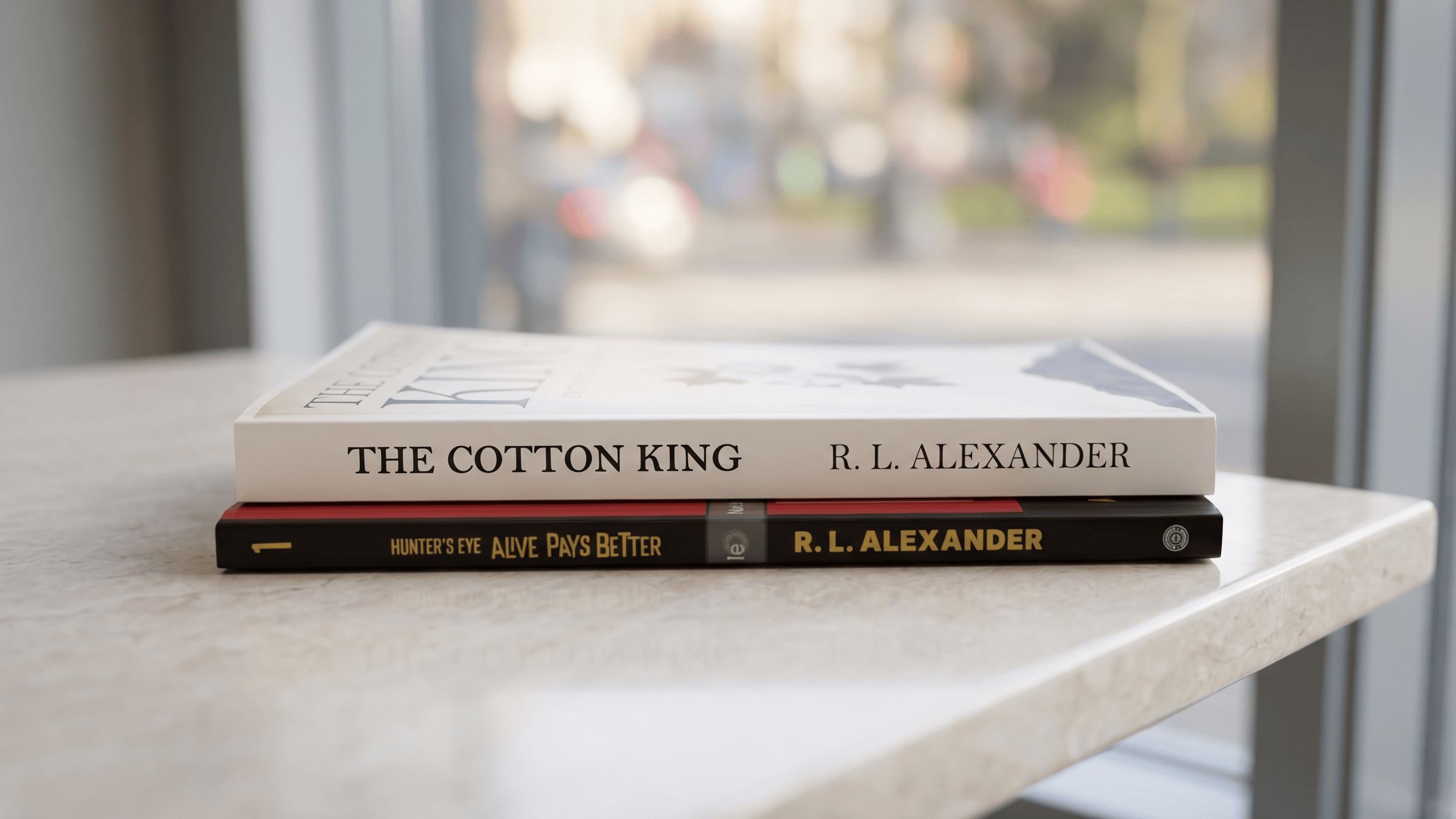
Writing the story was only the beginning. Formatting it, publishing it, and learning what the industry expected became an education of their own. At least, that was my experience.
I knew books long before I knew anything about publishing them, and that distinction matters. Growing up, when I thought about authors, I thought about the people whose books were already everywhere. Their books were the ones I saw at school or stacked inside Barnes & Noble. Their names were known by everybody, and their novels became movies, franchises, merchandise, and entire pieces of popular culture. I saw the finished thing without seeing everything that happened between somebody writing the last sentence and that book appearing on a shelf.
For a long time, I was simply somebody who wrote stories. Even now, I sometimes grapple with calling myself an author. I do not particularly love labels in the first place, and there was always something about the word author that sounded like a designation somebody else had to give you. A writer writes, so I knew I was a writer because I had been doing that for years. Author felt different, maybe because the authors I knew were names printed on books I bought.
I did not personally know somebody who could sit me down and say, “All right. You finished the manuscript. Here is what happens next.” So I wrote a lot of stories, some of which have been sitting with me for years. Some need editing. A few need a great deal of editing, which is part of why they have never been released, but another reason is much simpler: I did not know how to put them into the world.
People talk about writing a book and publishing a book as though there is only a small gap between those two things. There is not. There is an entire industry hiding in that gap, and my first release was the first time I really began discovering it.
The Part I Took for Granted
When I released my first book, I had not given much thought to formatting. Some of that was inexperience, but some of it was deliberate. I wanted to rage against the machine a little. I did not want to indent my paragraphs just because every other book did it. I did not want to follow a collection of publishing conventions merely because somebody had decided that was how books were supposed to look. I had written the story, and I thought the story ought to be enough.
I was wrong.
The problem was not that my book failed to obey some sacred publishing law. The problem was that it was harder to read. Without standardized indentation, the paragraphs did not guide the eye properly. The spacing was too loose in places. The margins felt strange. The pages did not have the balance I had spent my life seeing in professionally produced books without ever consciously noticing it. I had rejected those conventions as arbitrary before I understood what they were doing for the reader.
That was the part I had taken for granted. Good formatting had spent my entire life making itself invisible. I never stopped in the middle of a novel to admire the paragraph indentation because I was not supposed to notice it. The page was supposed to carry me through the story without making me think about its construction. Once the construction stopped doing that job, I finally saw it.
I finished my first book, got it out there, and had that moment of looking at it and thinking, Okay. It’s out. Then I began looking at other people’s books differently. I was no longer paying attention only to the words. I was looking at the physical objects and wondering why their books looked one way while mine looked another. Their margins were different. Their lines were tighter. Their paragraphs were indented consistently. Their title pages, copyright pages, chapter openings, headers, and page numbers all felt like parts of the same deliberate object.
Mine looked like a story I had written in a Word document and sent to a printer.
That realization hurt a little because I had put real work into the story. The way the book looked did not erase the writing, but it affected how the writing was received. Readers encounter the object before they can judge the story inside it. If the interior looks careless or becomes tiring to read, the reader does not know whether I rejected conventional formatting as an artistic statement. They only know that the book feels unfinished.
That first release taught me that formatting comes with the book. It is not decoration placed around the story after the important work is finished. The appearance of the page, the placement of the text, and the space given to the reader all shape the experience of the work. Learning that did not mean surrendering every creative decision to tradition. It meant understanding what a convention accomplishes before deciding to break it.
The Industry Hiding in the Gap
Once I started looking more closely, the questions multiplied. What belongs on a copyright page? What exactly is an ISBN, and why do different editions need different ones? What is an imprint? What information has to be sent to retailers? Why can changing one part of a book mean creating an entirely new edition? I had to learn about bleed, trim, metadata, distribution, cover dimensions, and file requirements. The distributor, printer, and retailer could each need something different from the same book.
Publishing suddenly stopped meaning “upload the story,” and none of those questions had anything to do with whether I could write.
That is one of the largest barriers to independent publishing, and I do not think it gets discussed nearly enough. There is absolutely a financial barrier, but there is also a knowledge barrier. People say, “You don’t know what you don’t know,” so often that the phrase barely means anything anymore, but publishing made me understand it.
How would I have known to research an ISBN if I did not know what an ISBN did? How could I recognize professional book formatting when good formatting had spent my entire life making itself invisible? Why would I think about the difference between owning my publishing identifiers and accepting one from a platform when I did not yet know there was a difference?
Nobody hands you a checklist when you decide you want to write stories. If you did not grow up around publishing, know somebody who works with books, study it professionally, or have somebody willing to guide you through the process, you will probably learn by searching for the answer to one question and discovering three more questions underneath it.
Then there is the money, and that part deserves more anger than it gets.
In the United States, Bowker is the exclusive ISBN registration agency. If you want to purchase your own ISBN directly and have yourself or your publishing company registered as the publisher, one ISBN currently costs $125. Ten cost $295, while one hundred cost $575. That first $125 might not sound outrageous when somebody describes it as a business expense, but life does not happen in isolated business expenses.
Somebody trying to publish their first book might also be paying rent or a mortgage. They might have children, groceries, a car payment, insurance, electricity, student loans, or something in the house that just broke. Somebody needs new shoes. They might be living paycheck to paycheck like millions of people do. Now tell that person they need $125 for a number.
The cost can grow quickly because separate formats can require their own ISBNs. The paperback is one product. The hardcover is another. Other editions may need additional identifiers. People within the industry can explain why those distinctions exist, but the explanation does not lower the price. Yes, publishing is a business, but calling something a business expense does not magically create money in somebody’s bank account.
We should be able to say plainly that this creates a barrier. When the only authorized source for an essential publishing identifier charges more for one number than many families can comfortably remove from a weekly budget, access is being restricted by money. Purchasing in bulk lowers the cost per ISBN, but that mainly rewards the people who already have enough money to buy in bulk. The beginning author with one finished manuscript pays the highest price per number precisely because they are beginning.
Meanwhile, so much of the online publishing conversation assumes everybody has already made it past this point. People argue about marketing strategies, algorithms, artificial intelligence, sales funnels, rapid-release schedules, social media, wide distribution versus exclusivity, and whatever else the industry happens to be fighting about that week. Somewhere beneath all that noise, a person who just finished their first novel is typing, “Do I need an ISBN?” into Google.
That person matters too, and maybe more conversations need to begin there.
None of those things tell us whether that person can write. They tell us something about access.
Sometimes Somebody Needs a Door
This is why the platforms that lower the entry barrier matter so much. Amazon KDP allows authors to publish print books without paying an upfront publishing fee and can provide a free ISBN for eligible paperback and hardcover editions. There is a tradeoff because that ISBN belongs to the KDP publishing path and cannot be taken to another service for the same edition. If an author supplies their own ISBN, they retain more control over how that edition is identified and distributed.
Barnes & Noble Press gives independent authors another direct route into print and digital publishing without charging an upfront fee simply to use the platform. Kobo and other services have created similar opportunities on the digital side. None of these companies is operating purely out of kindness, and every platform comes with rules, restrictions, advantages, and disadvantages that authors should understand before handing over their work. That does not make the access they provide meaningless.
Everybody does not have hundreds or thousands of dollars sitting around to discover whether anybody wants to read their book. Sometimes somebody needs a door. They need a way to get the first book out without taking grocery money, missing a bill, or waiting another five years for the perfect financial moment.
Maybe the book sells five copies. Maybe it sells fifty. Maybe it sells fifty thousand. Nobody knows before the thing exists, and that first opportunity matters because publishing the book teaches you things that writing the manuscript cannot.
That is what happened to me. My first release taught me what I had taken for granted about formatting. It taught me to pay attention to margins, indentation, page construction, and typography. It forced me to think about a book as a physical object instead of a Word document containing a story. From there, I began learning about identifiers, distribution, metadata, editions, retailer systems, cover requirements, print specifications, and all the other pieces sitting behind that object.
Eventually, that education became part of building Asterrow Books, but I did not begin there. I began with, Okay. I wrote this thing. How the hell do I put it out?
The barrier to becoming an author does not always come down to whether somebody can write a good story. Sometimes the barrier is knowing what the next button does or understanding why the printed proof looks strange. Sometimes it is discovering that the cover needs dimensions they have never heard of or realizing that publishing the hardcover and paperback as separate products means needing another identifier. Sometimes it is staring at $125 and deciding groceries matter more that week.
Independent publishing matters partly because it has broken down some of those walls. Being able to take something you wrote and put it into the world without first convincing somebody in New York that you deserve to be there matters. Being able to begin without having thousands of dollars matters. Being able to learn by doing matters.
If you keep going, you start making different decisions. Maybe you buy your own ISBNs, create an imprint, or build a publishing company. Maybe you hire an editor. You might learn formatting yourself or hire somebody else to do it because you have finally accepted that staring at paragraph styles for four hours makes you want to throw your computer out a window.
You grow into it, and that is probably what I wish somebody had told me years ago.
You do not have to know everything before you begin. You should learn as much as you can, take the work seriously, and care about the reader who is spending money and time on something with your name printed across the front. There is still a difference between taking the work seriously and believing you must arrive already knowing an industry nobody ever taught you.
I did not arrive knowing it. I learned because I finally put something out. Then I looked at what I had done, compared it with what other people had done, and asked why there was a difference. Once I understood that answer, I learned the next thing, followed by the next one.
I am still learning. There are probably things about publishing that I do not know right now that I will consider obvious five years from now, and that is fine. I have stories to put into the world. Now I know a hell of a lot more about how to get them there.
Leave a Reply